What's the first-day plan to get rid of deer fly?
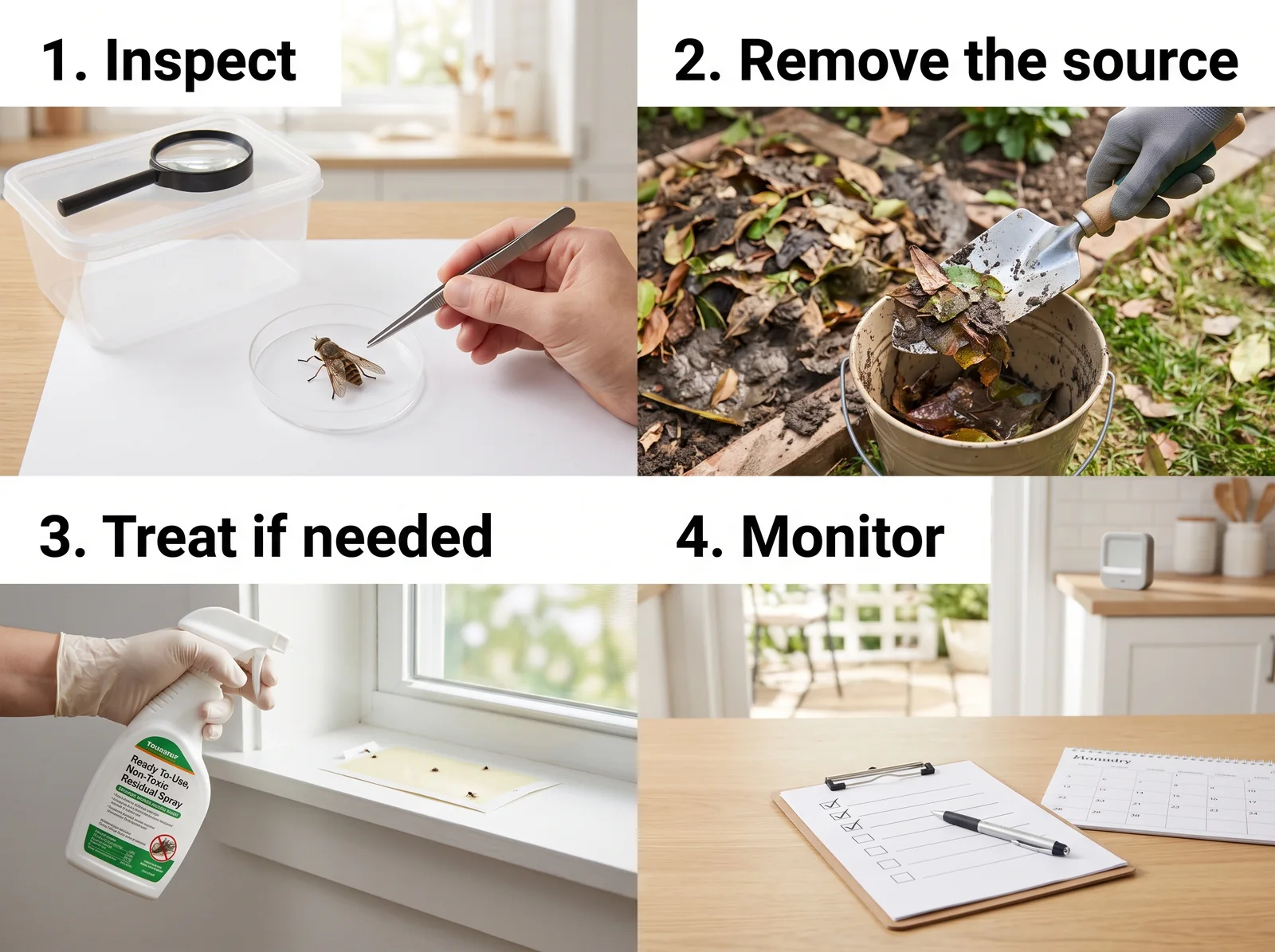
Start by noting where and when you're getting bitten. Deer flies are most active midday, on warm, still days, near grass, brush, or water. Write down the spots so you know exactly where to focus your work.
Change what you're wearing before you go outside again. Deer flies key in on movement and dark colors, so light-colored, long-sleeved clothing and pants tucked into socks reduce easy targets right away.
Cut back tall grass and brush in the areas where you noted activity. This won't eliminate deer flies in one afternoon, but it removes the shaded resting spots they use between attacks.
If you have a sticky trap or a dark-colored trap ball designed for horse and deer flies, set it up near the problem area today. These traps work because deer flies are drawn to a dark, moving shape, and they give you an early read on how many flies you're dealing with.
Am I actually dealing with deer fly?
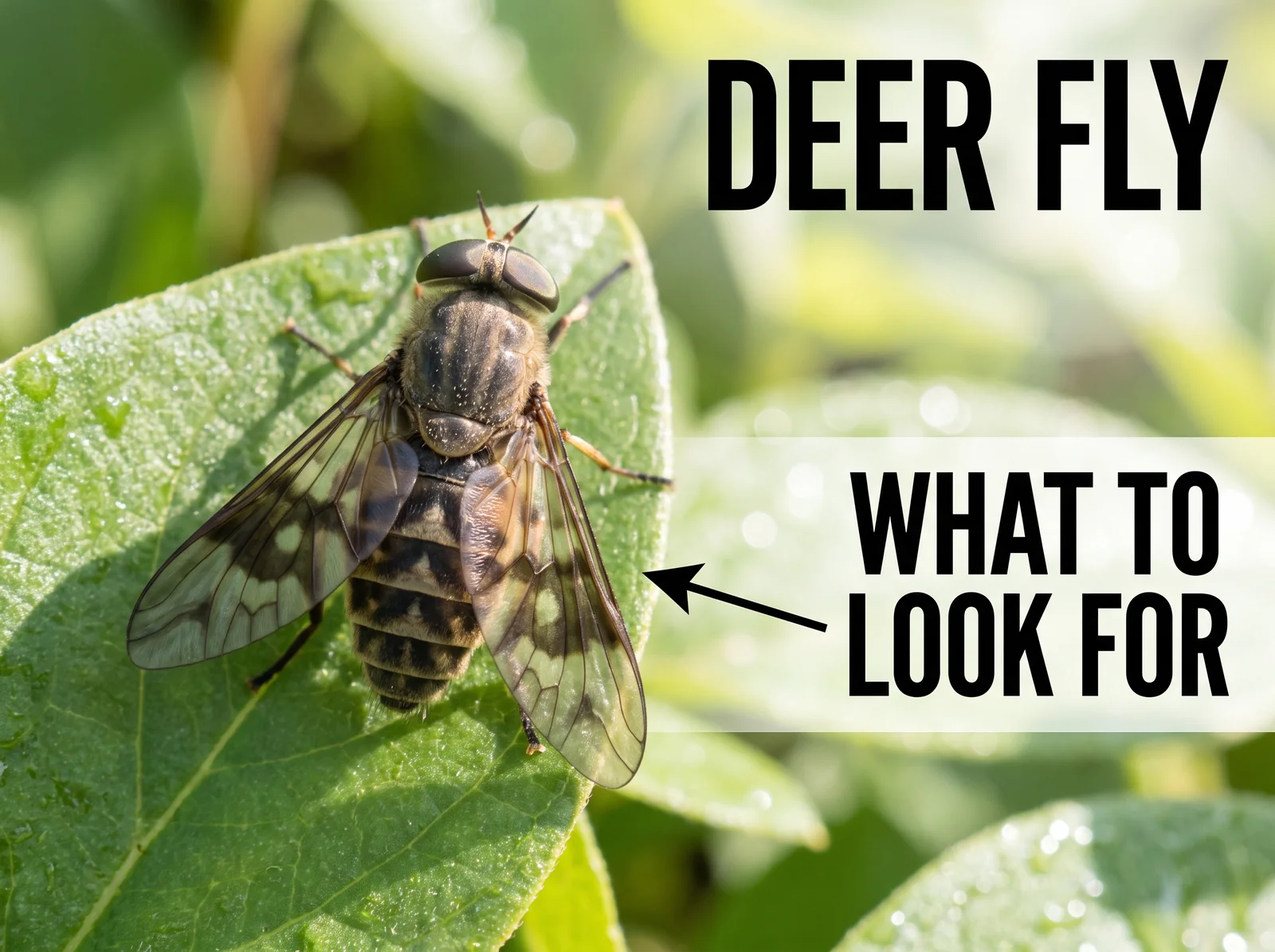
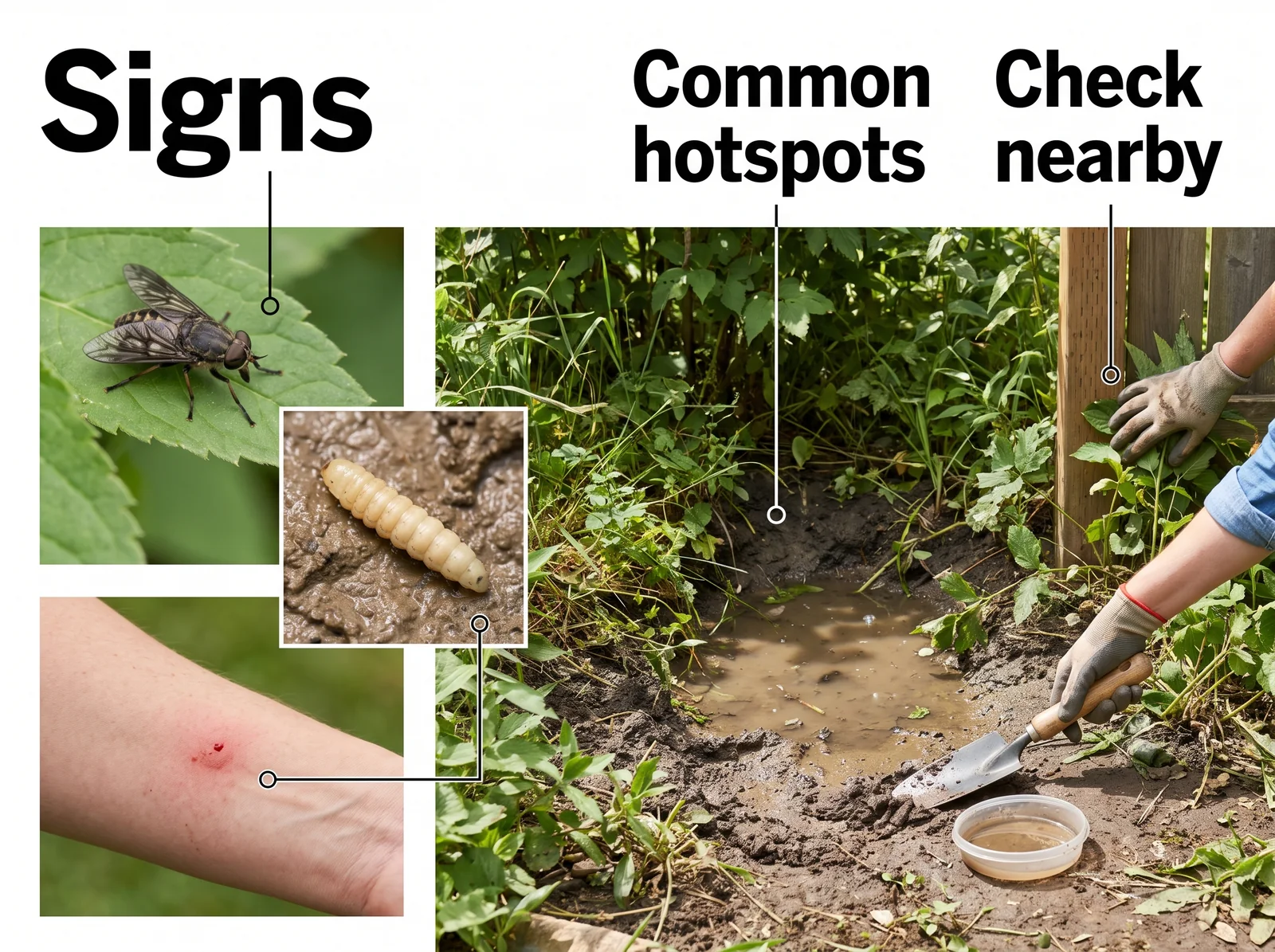
Before you spend time or money on removal, confirm the pest. Deer flies are stout, about the size of a housefly, with dark bands or patterns on clear or smoky wings. Their eyes often look brightly colored or patterned, which sets them apart from house flies and horse flies.
The bite itself is a strong clue. Deer flies slice the skin rather than pierce it, so the bite is immediate and sharp, often followed by a red welt that can stay itchy or sore for a day or two.
If you're not sure what's biting you, compare what you're seeing against clear photos before treating anything. Confirming the species first means you won't waste effort on the wrong control method or a fly that isn't actually a deer fly.
Getting the identification right at the start makes the rest of your plan to get rid of deer fly far more effective, since removal methods differ from those used for gnats, black flies, or stable flies.
Where are deer fly coming from on your property?
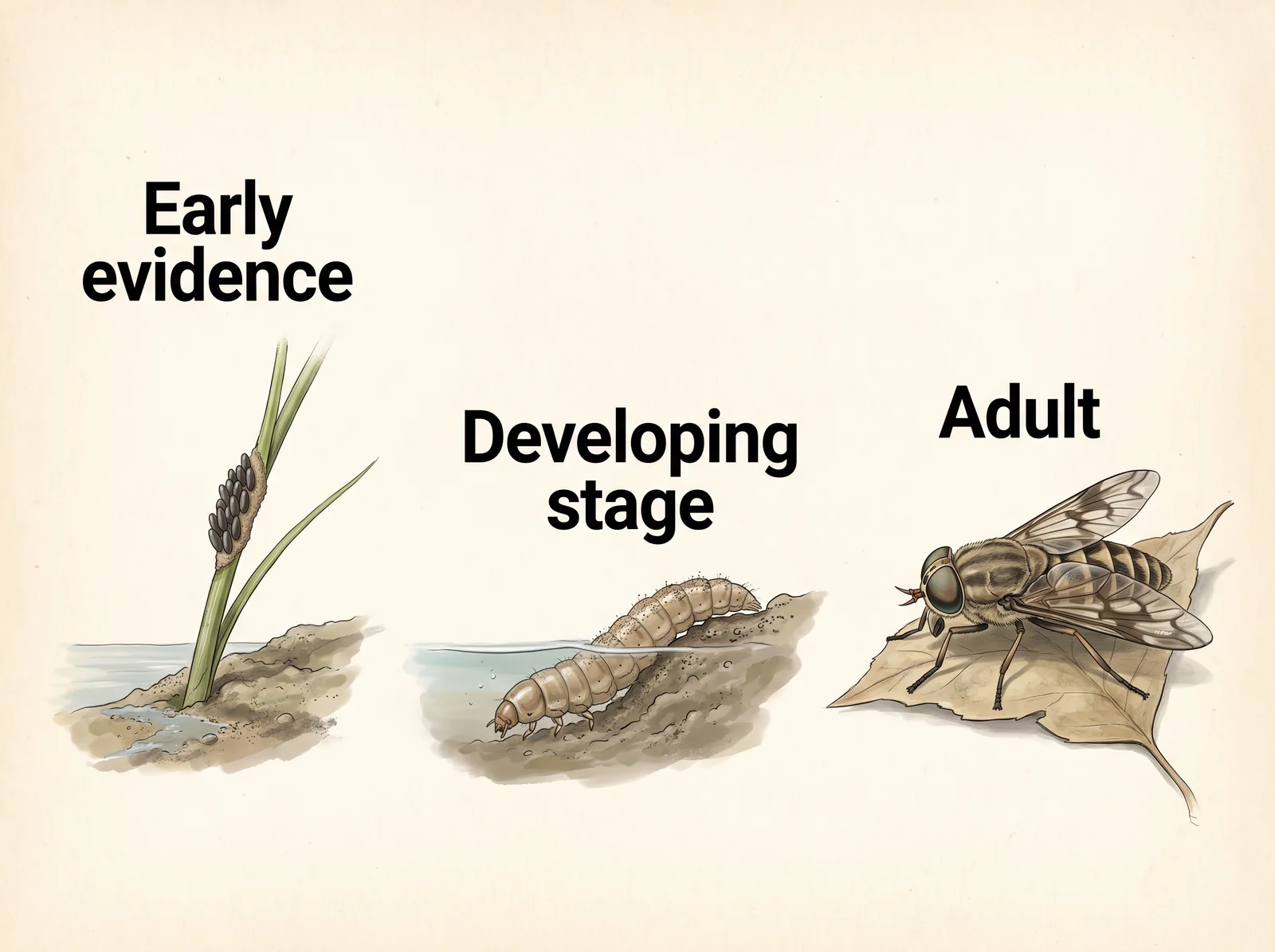
Deer flies don't nest in your house or yard the way some pests do. Instead, they breed in moist soil, mud, or shallow water at the edges of ponds, streams, ditches, or marshy low spots, often on neighboring land.
Walk your property and look for these wet or shaded areas, especially anywhere with standing water that lingers after rain. Tall grass, weedy fence lines, and brush piles near these spots are where adult deer flies rest and wait for a host to pass by.
Check high-traffic areas too, like trails, gardens, and spots where kids or pets play. Deer flies are strong fliers, so the source of the infestation may be farther away than where you're actually getting bitten.
Mapping out these zones helps you target your effort. You can't drain someone else's wetland, but you can identify which parts of your yard sit closest to deer fly breeding and resting habitat.
How do you get rid of deer fly around your yard?
Habitat reduction is the most reliable way to get rid of deer fly activity over time. Keep grass mowed short, clear brush piles, and trim back overgrown shrubs along fence lines and trail edges where adults rest.
Traps are the next practical step. Sticky traps shaped like a dark ball or panel, hung at about head height near problem areas, take advantage of deer flies' attraction to large, dark, moving shapes. Check and replace them regularly through the season.
Personal protection matters just as much as yard work. Light-colored clothing, long sleeves, and a hat with mesh netting for high-activity areas cut down on bites while you work on longer-term fixes.
If a fly population is heavy and persistent despite habitat work and trapping, only use an EPA-registered product labeled for deer flies and the specific site you're treating, and follow the label completely from start to finish.
- Mow and clear brush near resting areas
- Hang dark sticky traps near trails and yard edges
- Wear light, long-sleeved clothing outdoors
- Avoid dark clothing and heavy scented lotions
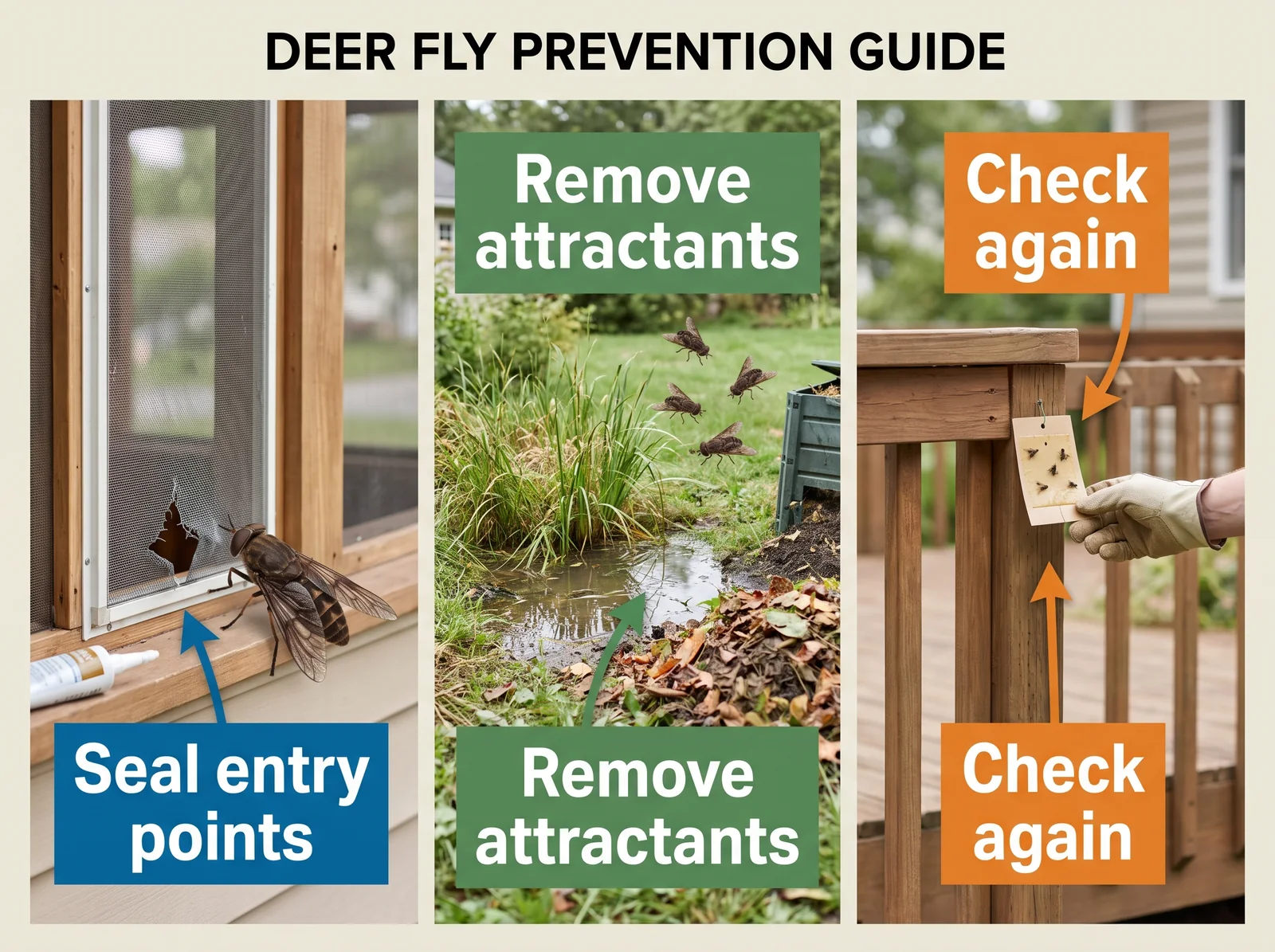
How do you know if your deer fly control is working?
Keep a simple log of bites and sightings, noting the date, time of day, and general weather. This tells you whether activity is dropping as you clear habitat and set traps, or staying steady.
Check your traps on a regular schedule, at least once a week during peak season. A drop in the number of flies caught over several weeks is a good sign your yard work is paying off.
Watch the areas you identified during inspection, especially wet, brushy, or shaded spots. If activity stays high in one specific zone while it drops elsewhere, that tells you where to concentrate more effort.
Monitoring isn't a one-time task. Deer fly numbers shift with rainfall and temperature, so recheck your traps and notes through the whole season rather than assuming one good week means the work is done.
How can you keep deer fly from coming back?
Prevention builds on the same habitat work you did to get rid of deer fly in the first place. Keep grass cut short, remove brush piles, and manage any standing water you control so the yard stays less inviting to adults looking for a place to rest.
If your property borders a pond, stream, or marshy area you don't control, focus on creating a buffer. Keep the grass mowed close to your house and outdoor living spaces, since deer flies favor taller vegetation just past the mowed line.
Screen porches and outdoor sitting areas if deer flies are a recurring problem in your yard. This gives you a bite-free space without relying on constant repellent use.
Reassess your yard each spring before deer fly season ramps up. A quick walk-through to check for new wet spots, overgrown brush, or debris piles keeps the problem from building back up year after year.
Are deer fly bites a concern for kids and pets?
Deer fly bites are painful but usually not medically serious for most people or pets. The bite causes a sharp sting followed by redness, swelling, and itching that can last a couple of days.
Watch for signs of a stronger reaction, like spreading redness, significant swelling, or symptoms beyond the bite site. Some people and pets react more strongly than others, and repeated bites can add up.
Keep kids and pets out of tall grass, brushy edges, and shaded trail areas during peak deer fly hours, generally midday on warm, still days. Light-colored clothing helps kids the same way it helps adults.
Check pets after time outdoors, especially around the ears, head, and legs where deer flies commonly bite. If a pet is scratching persistently at one spot or seems unusually irritated, it's worth a look from your vet.
When does deer fly control need a professional?
Most deer fly problems respond to habitat cleanup, trapping, and personal protection. But if you're dealing with a wooded property, farmland, or land near a wetland where breeding habitat can't realistically be removed, activity may stay high no matter what you do on your own.
Livestock owners often deal with heavier deer fly pressure, since the flies are drawn to large, warm-bodied animals. If bites are affecting animal health or productivity, a licensed pest professional experienced with biting fly control on agricultural sites can set up a larger-scale trapping and management plan.
Consider professional help if bite reactions in your household are severe, if the population stays high across an entire season despite consistent trapping and cleanup, or if the affected area is too large to manage with DIY traps alone.
A professional can also confirm the species and pinpoint breeding sites you might miss on your own, which matters if you want a real handle on how to get rid of deer fly on a larger or more stubborn property.
Questions you may still have
Do deer fly bites hurt more than mosquito bites?
Yes, most people find deer fly bites sharper and more sudden. Deer flies slice the skin to feed rather than piercing it quietly like a mosquito, so you usually feel the bite right away. The area often swells, reddens, and stays itchy or sore for a day or two, longer than a typical mosquito bite in most cases.
What attracts deer flies to a person or yard?
Deer flies are drawn to movement, dark colors, body heat, sweat, and carbon dioxide. That's why they're often worse for people who are active outdoors, like hikers, joggers, or anyone working in the yard. Wearing light-colored clothing and staying still less often helps reduce how easily you're noticed.
Can I get rid of deer fly with sprays alone?
Sprays alone rarely solve a deer fly problem because the flies breed away from your yard and constantly fly in from nearby habitat. Habitat cleanup, trapping, and personal protection do most of the work. If you use any pesticide, choose an EPA-registered product labeled for deer flies and the site, and follow the label exactly.
How long does deer fly season usually last?
Deer flies are typically most active from late spring through mid-summer, tapering off by late summer depending on your region and weather. Activity peaks on warm, sunny, windless days and drops off in rain, strong wind, or cooler temperatures. Exact timing shifts year to year based on local conditions.
Why do deer flies seem worse near water and woods?
Deer fly larvae develop in moist soil and mud near ponds, streams, and marshy areas, so adults concentrate near these breeding sites before spreading out. Wooded edges and tall grass nearby give adults shaded resting spots between feeding attempts, which is why yards backing up to these areas often deal with heavier activity.